
Species We’re Working With
We primarily focus on Day Geckos and Skinks here at Divergent Exotics as far as species that we choose to breed and produce. That’s not to say there aren’t a few outliers, because there certainly are, and of course some animals are just pets. For the most part, here’s the short list of species we’re actively breeding (or attempting to with some of the more difficult species), with more details down below:
Day Geckos:
Peacock, lined, Standing’s, Electric Blue, Réunion Island, Kim Howell’s
Skinks:
Emerald tree skinks, Kenyan Zebra Skinks, Schneider’s Skinks, Ocellated Skinks, Fire Skinks, Sandfish Skinks
Misc. Geckos
Viper Geckos, Chameleon Geckos (Occidentalis)
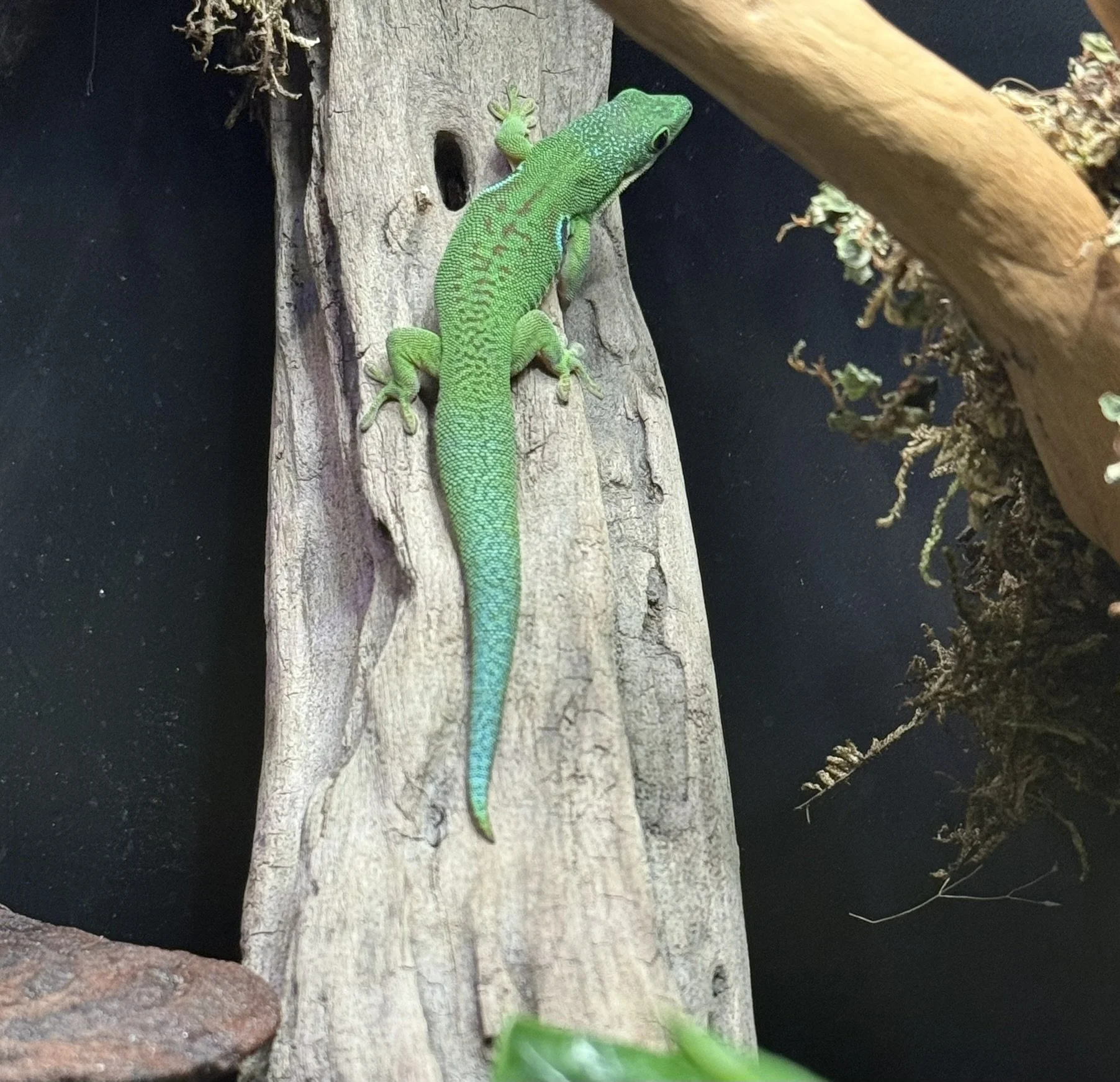
Peacock Day Geckos
Phelsuma quadriocellata - least concern
Our breeding pair of peacock day geckos are Pen(dragon) and Guen(evere), both farm-raised in Florida. Pen is pictured here, and they were my first species of day geckos I acquired. They’re so active and funny, hopping around with surprising dexterity, sliding down sticks and vines like Tarzan, and not afraid to give you the stink eye if you’re invading their space.
As with all day geckos, they will need a low basking light, UVB, and a good LED to show their best color. I find bee pollen to be a valuable addition to their diet, which is already included in Blue River Diet formulas.
Reptifiles Care Sheet: here
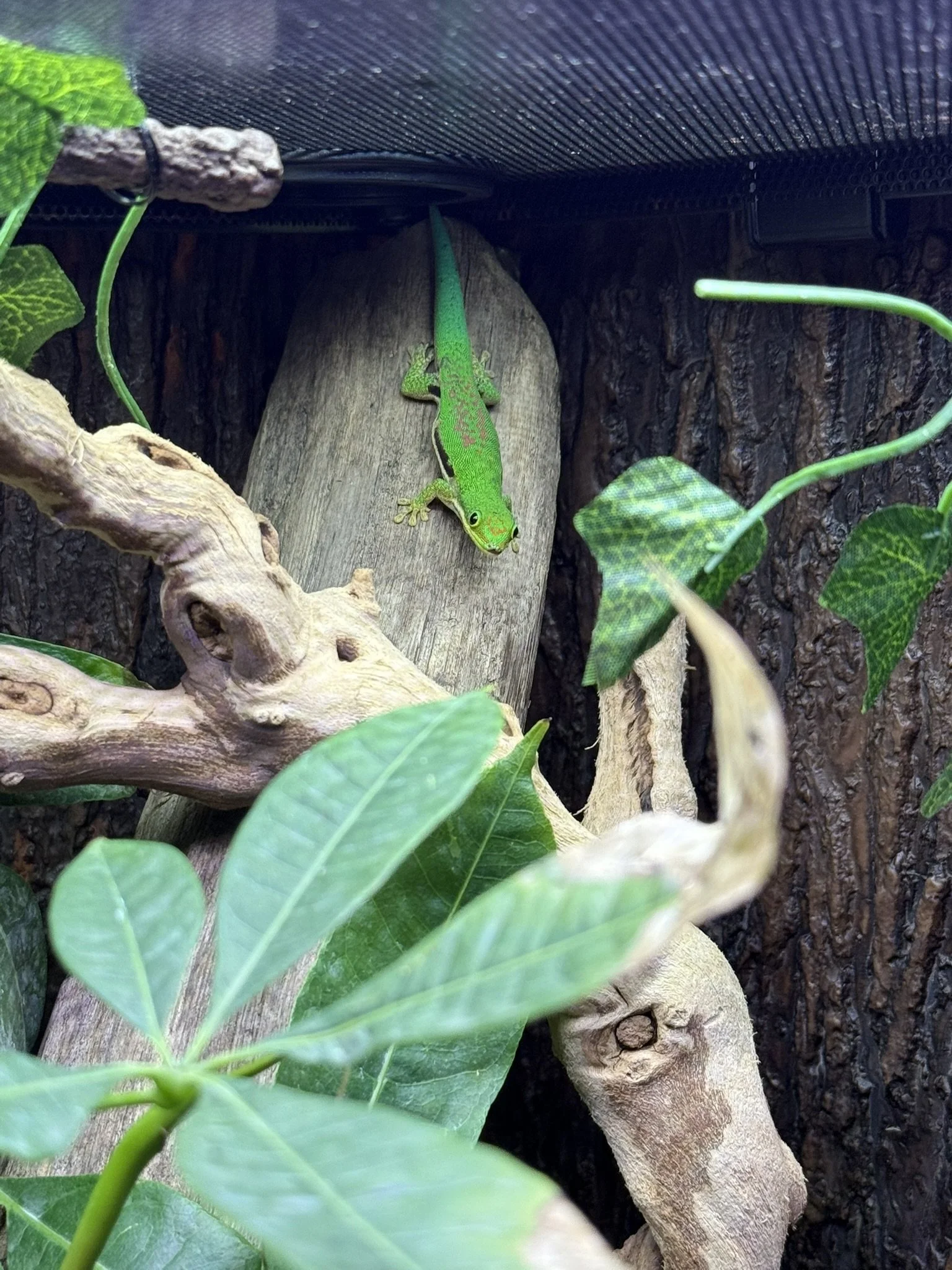
Lined Day Geckos
Phelsuma lineata - least concern
Lined day geckos were my second species of day gecko. I had fallen so in love with the peacocks that I wanted to expand. My current pair is not quite breeding yet, but I do still have some hatchlings from the previous female. My male Ziggy is from Tiki Geckos, and the female Zuri is from our friends at A Shore Thing Exotics. This is definitely a species that is bolder and more interactive when captive bred, and I also find them to be a bit hardier and more forgiving than the peacocks.
As with all day geckos, they will need a low basking light, UVB, and a good LED to show their best color. I find bee pollen to be a valuable addition to their diet, which is already included in Blue River Diet formulas.
Reptifiles Care Sheet: here
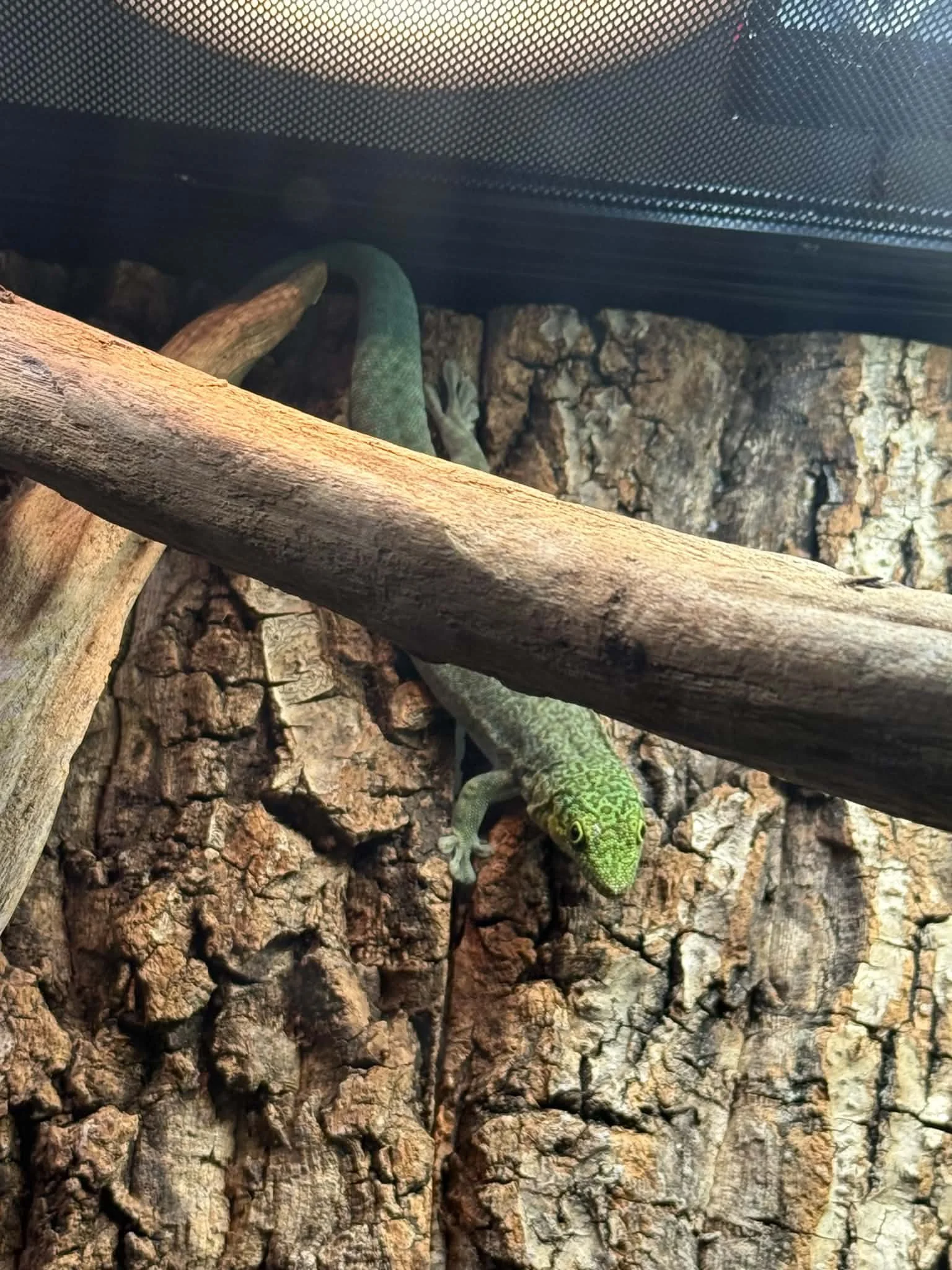
Standing’s Day Gecko
Phelsuma standingi - vulnerable
Standing’s day geckos are really special to me. They were the first species of day gecko I ever really wanted, but I wanted to gain experience with them before going larger. Cosmo and Wanda here are our breeders and we hope to hatch out our first babies in 2026. Cosmo was an expo purchase with origins unknown but said to be captive bred, Wanda was a gift from a friend who knew her breeder well.
Standings are one of the few super social species of gecko. They won’t eat their young unlike many other Phelsuma species, and will form family units much like Tokay geckos. My pair are almost always in physical contact with each other, and Wanda will follow Cosmo around when it’s cricket time as he’s arguably the better hunter. She seems to think he’ll feed her and wants to take crickets from his mouth, but he thinks she’s perfectly capable of hunting her own and encourages her to do so.
As with all day geckos, they will need a low basking light, UVB, and a good LED to show their best color. I find bee pollen to be a valuable addition to their diet, which is already included in Blue River Diet formulas.
Reptifiles Care Sheet: here
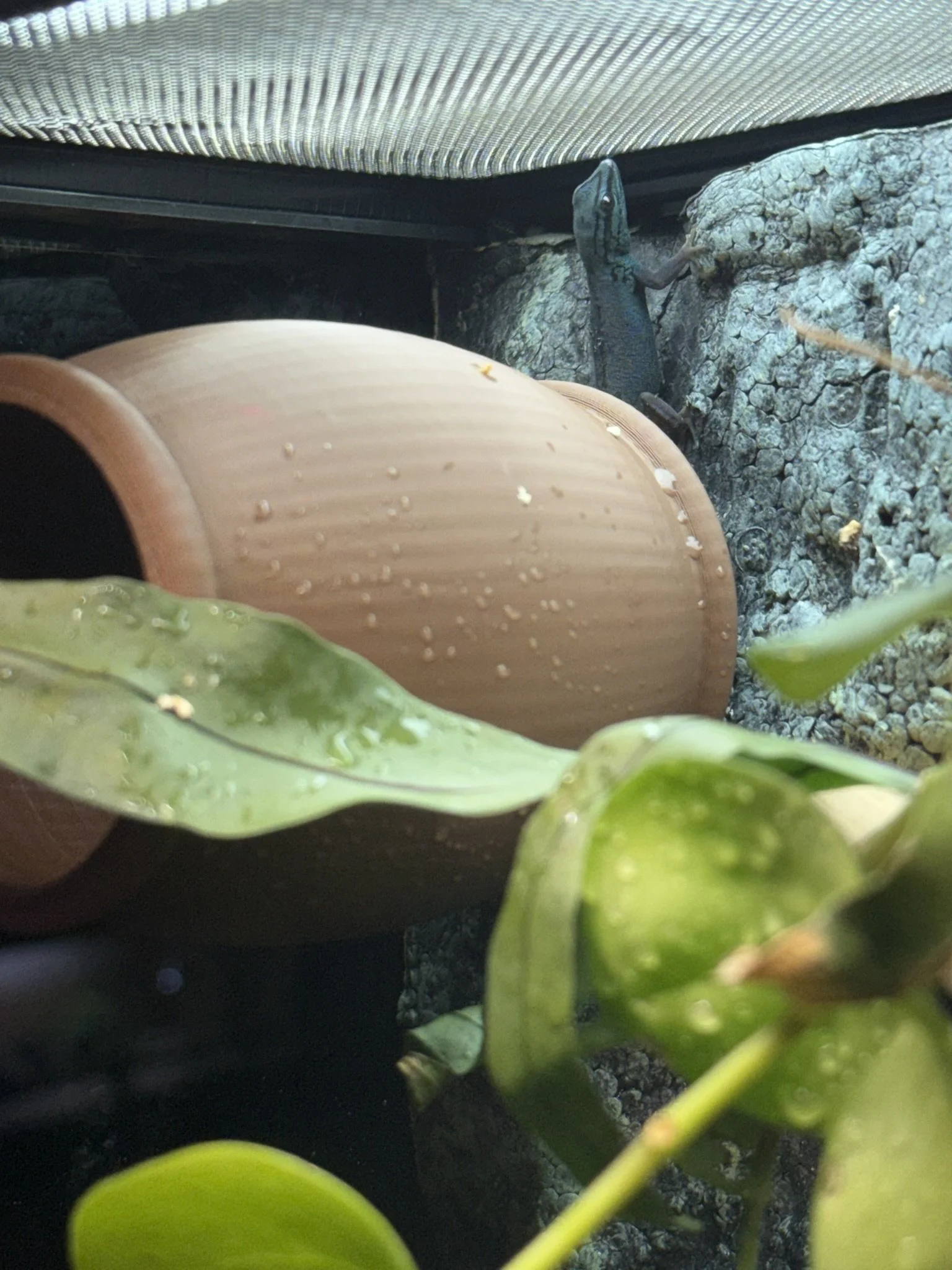
Electric Blue Day Gecko
Lygodactylus williamsi - critically endangered
Late 2026 to early 2027, we should be welcoming our first electric blue day gecko babies. These are the smallest species of day gecko I own. Despite their diminutive stature, they are an active species and still need plenty of room to do their day gecko activities. The species is highly sexually dimorphic, with males a bright electric blue (little Azure here is still an acclimating sub-adult and not in full color) and females more olive or drab brown, with areas of blue to green color. Both genders will sport a yellow to orange belly.
Azure and Spring are currently housed separately while they get a bit older and finish up growing, even though Spring is already laying dud eggs for us. We will always prioritize the health of our breeders, especially the females, and not pair them before they’re ready.
As with all day geckos, they will need a low basking light, UVB, and a good LED to show their best color. I find bee pollen to be a valuable addition to their diet, which is already included in Blue River Diet formulas.
Reptiles Magazine Care Sheet: here
*Note: I do not agree with their tank size recommendations. I believe a 12×12×18” is the minimum enclosure size for a single individual, and it would need to be densely planted for a pair. My pair, once introduced to each other, will be in an 18×18×24” enclosure.
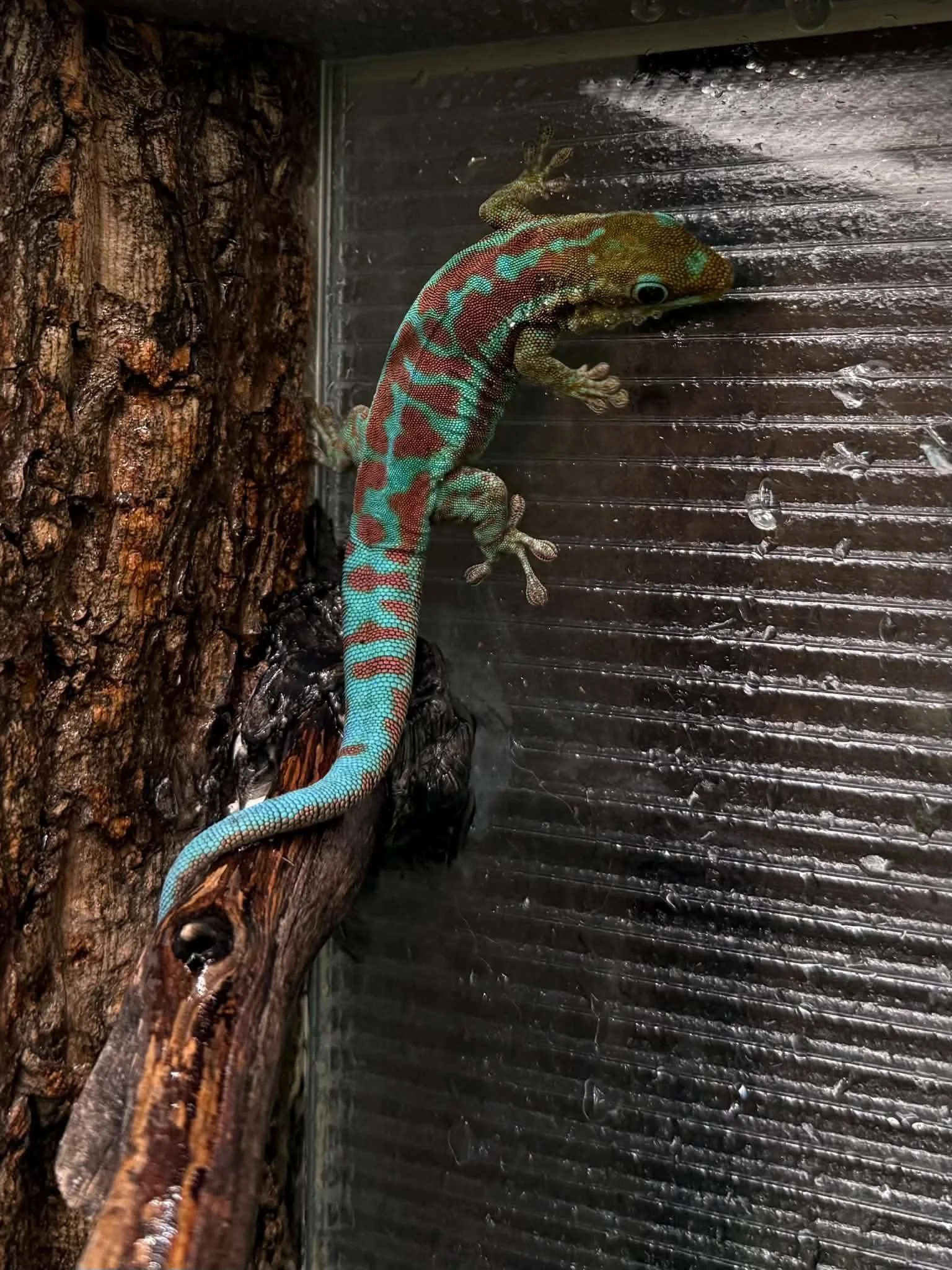
Réunion Island Day Gecko
Phelsuma borbonica mater - endangered
This has been a dream species of mine for quite some time, and I’m excited to be putting a pair together in 2026. Whether we’ll see babies this year or not remains to be seen. The male is 5 years old and a proven breeder, the female is 1.5 years old. Trouble earned his name by escaping his shipping container and being At Large in my reptile room for the first forty-five minutes of our acquaintance. I had to move dart frog racks and so many tanks before I was finally able to secure him. Trixie is just a sweet little girl, and I’m a sucker for alliteration, so Trouble and Trixie are our pair. Her first clutch was duds, which isn’t uncommon, so I’m crossing my fingers waiting on her next clutch.
As with all day geckos, they will need a low basking light, UVB, and a good LED to show their best color. I find bee pollen to be a valuable addition to their diet, which is already included in Blue River Diet formulas.
ExoTerra Article: here
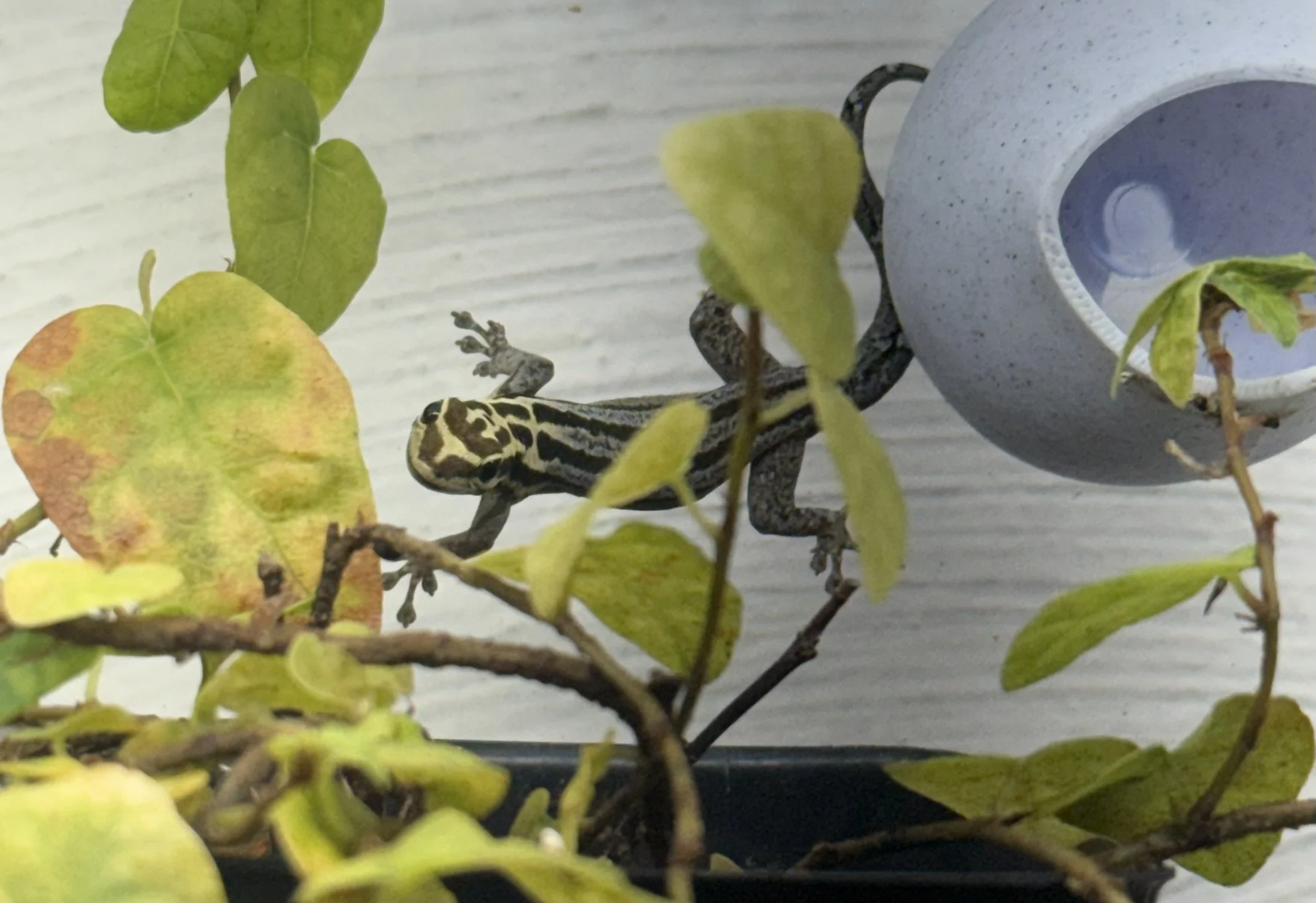
I very much would -like- to be working with the Kim Howell’s dwarf gecko, also known as the Tanzanian dwarf gecko, and the zebra dwarf gecko. However, these little guys are surprisingly hard to find. I have the little female pictured here that was bred by our friends over at A Shore Thing exotics.
If anyone has any captive-bred specimens available, please reach out! I’d love to connect.
Dwarfgeckos.com care sheet: here
Kim Howell’s Dwarf Gecko
Lygodactylus kimhowelli - least concern
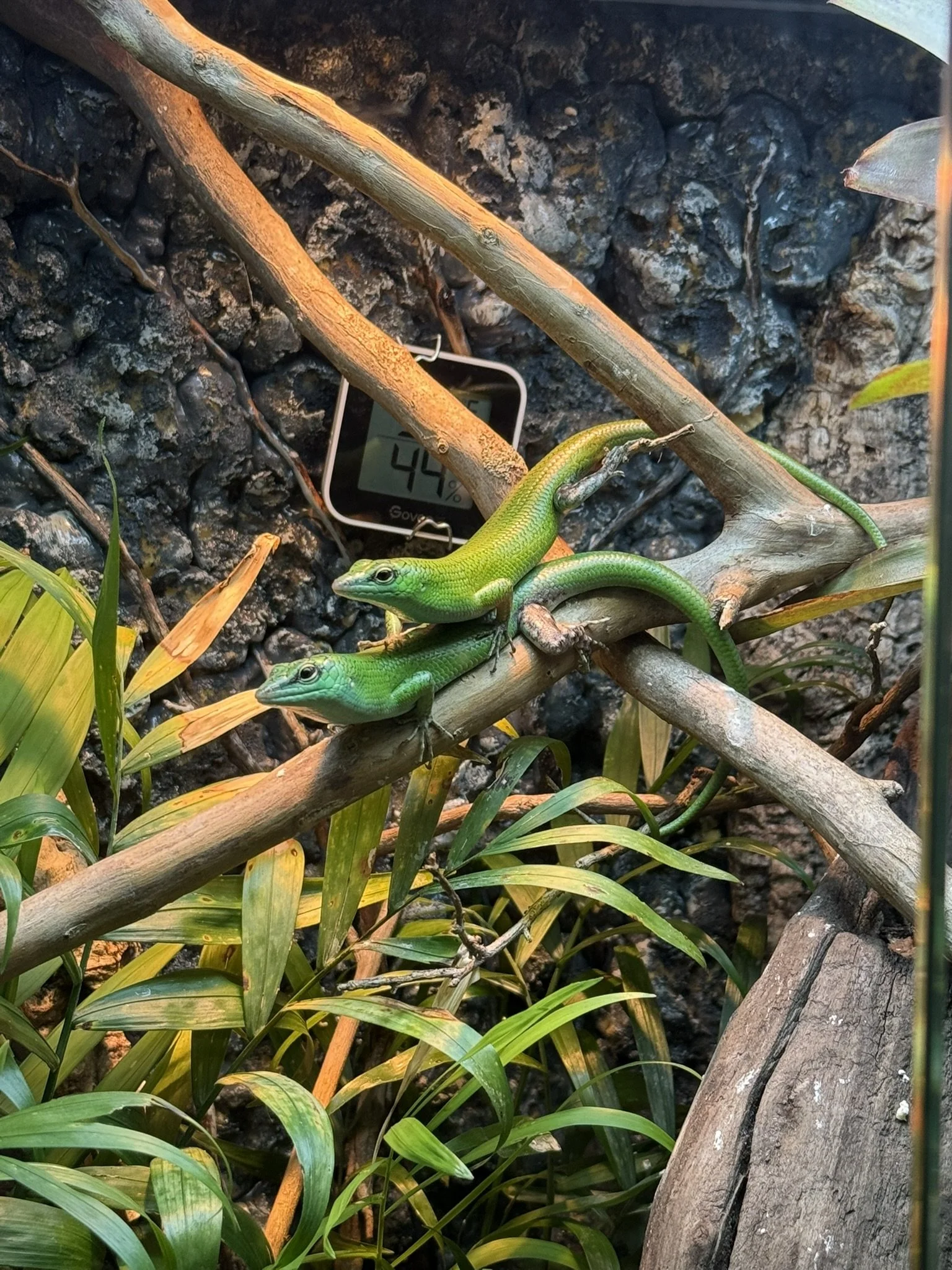
Emerald Green Tree Skink
Lamprolepis smaragdina - least concern
The emerald green tree skink is a marvelous little animal. My pair are wild caught from Solomon Island, as not too many of these little guys are available in captivity just yet. With wild-caught specimens, age is of course unknown, but both of these guys have grown substantially in the time I’ve had them, so I think I lucked out with a younger pair. While I did witness a lock between Squall and Rinoa last year, it did not result in any eggs. I’m hoping 2026 will be their time to shine!
Reptifiles care sheet: here
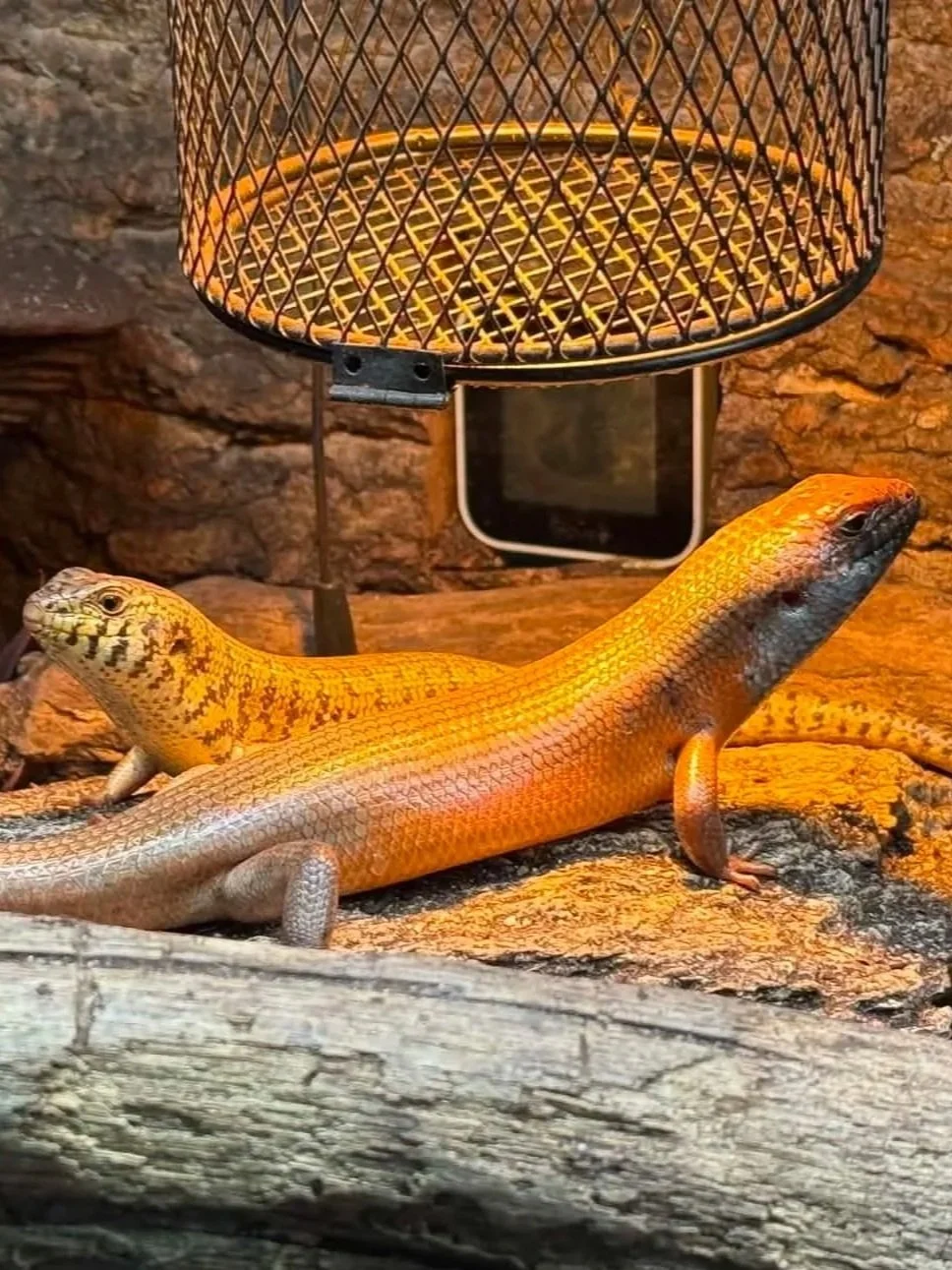
Kenyan Zebra Skink
Trachylepis dichroma - least concern
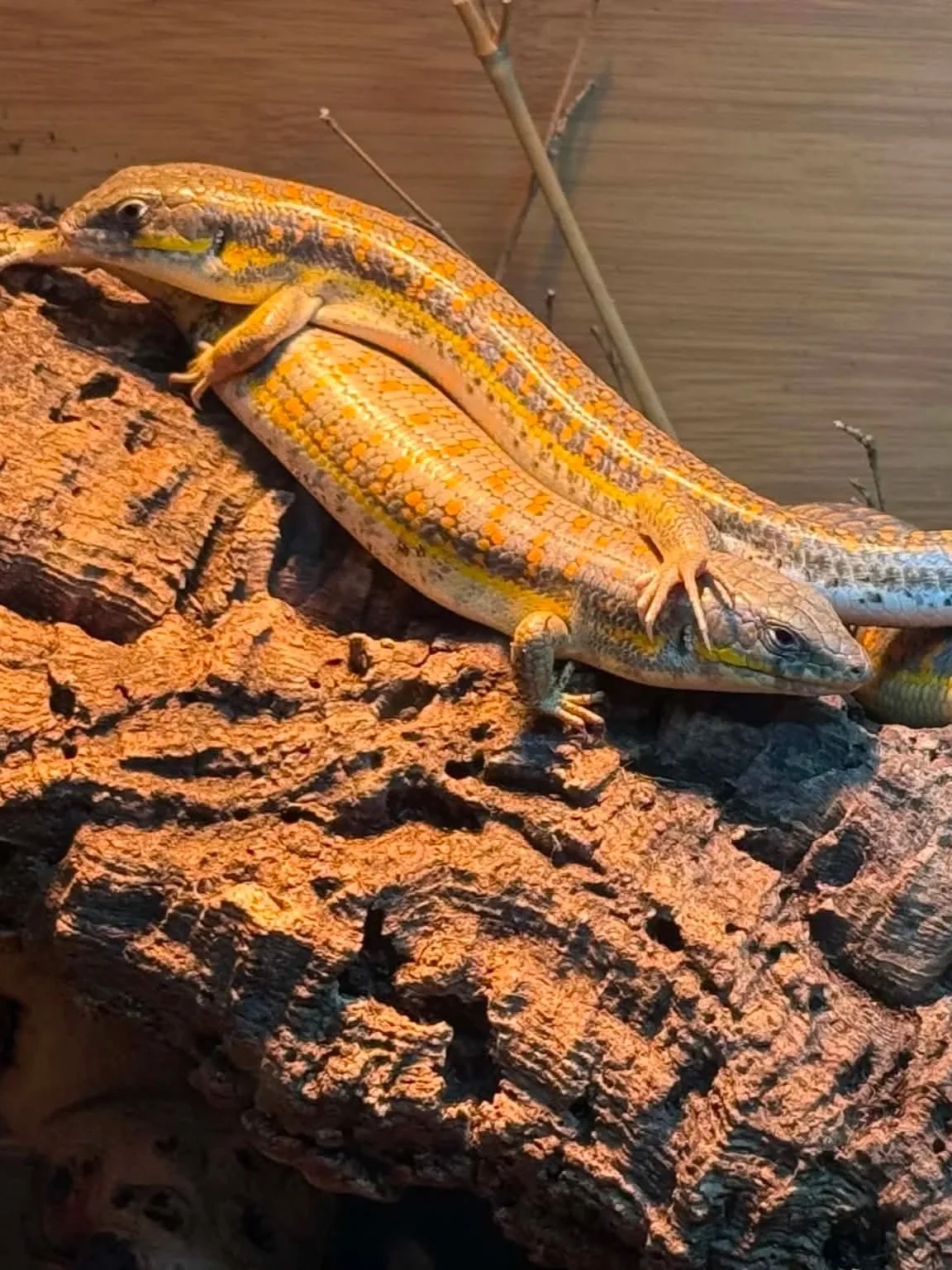
Kenyan Zebra Skinks are wonderful little lizards and another very clearly sexually dimorphic species. Juveniles and females have the striping ‘zebra’ pattern, while males lose this pattern as they age, going to a more bronze and orange coloration. Clive here gets way brighter when he’s not just about to shed, like he is in this particular picture. His lady friend Jill is quite a bit more shy, whereas Clive is puppy-dog tame. They will both eat off of tongs, and will eat (or try) just about any feeder I’ve given them.
Jill doesn’t seem to be the biggest fan of Clive when he’s feeling romantic, but I am crossing my fingers for a litter toward the end of this year. And yes, litter, not clutch—zebra skinks give live birth!
402Exotics Care Sheet: here
Schneider’s Skinks
Eumeces schneiderii- least concern
Schneider’s Skinks are just now starting to be produced as captive bred specimens. My trio are long-term captives that I’m hoping to cycle this winter and encourage into production for 2027. They’re not a very shy species in my experience, though they do have a very small “up and active” window normally around 10-12 daily for my guys. If they want to interact with you, they’ll often prefer climbing around on you to eating. I’ve had my female literally ignore bugs on tongs, jump on the tongs, and scamper up and wind up on my head! Very friendly little guys, and I can’t wait to work with on trying for some babies next year.
Dubia care sheet: here
Ocellated Skinks
Chalcides ocellatus - least concern
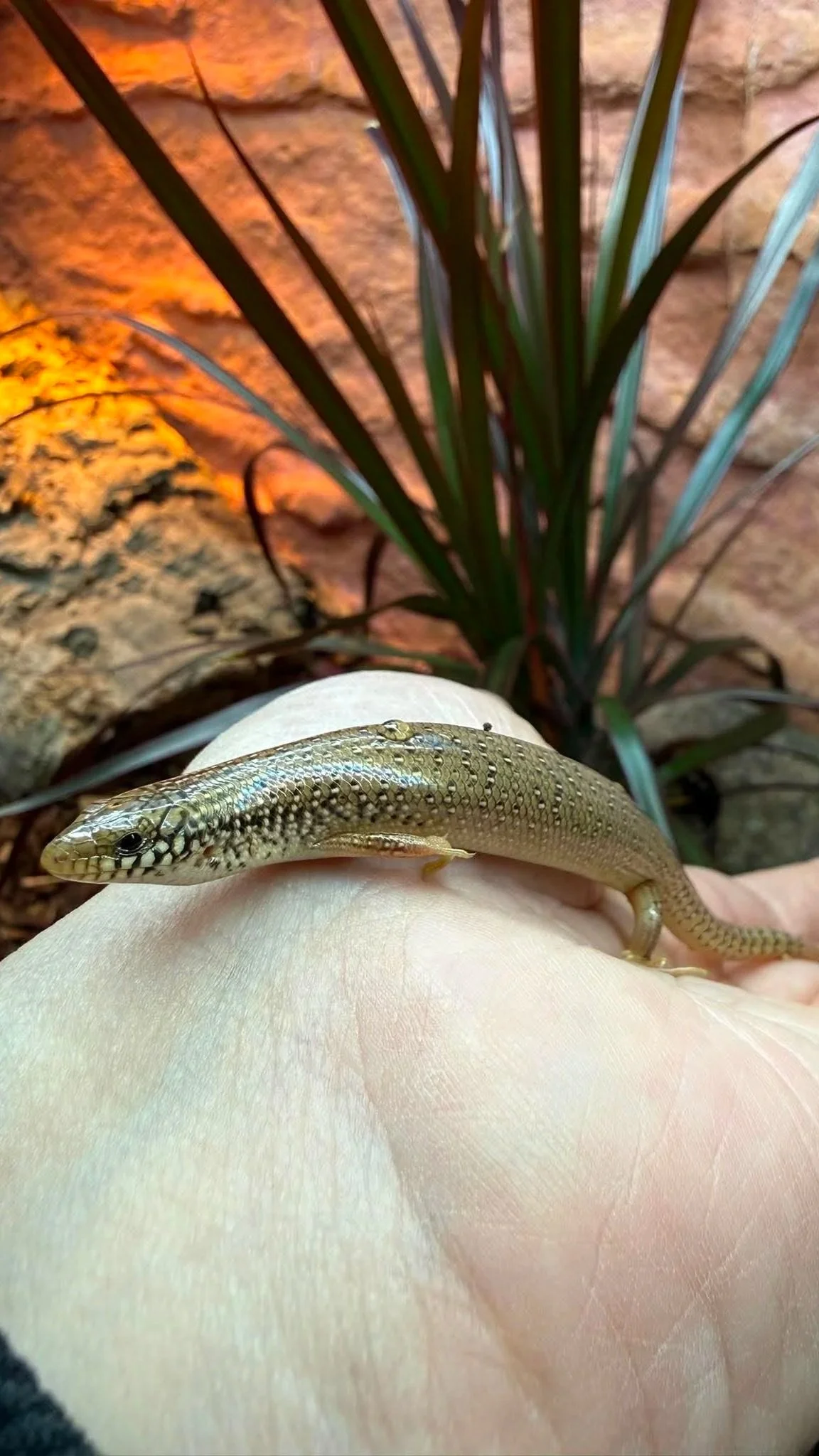
Ocellated skinks are cute, slippery, and fantastically active and such a joy to watch. These guys are highly adaptable—as long as their temperatures are hot, they can adapt to pretty much anything else. There are in fact invasive populations in both Florida and Arizona, so they’re a rather forgiving skink as far as husbandry is concerned.
I acquired juveniles in 2026 from multiple lines and sources and will be waiting as they grow up to determine genders and breeding groups, but these are another awesome, rather social species of live-bearing skink. Their long little bodies and short little legs just make my heart sing watching them sprint around.
TheBioDude Care Sheet: here
Fire Skinks
Lepidothyris fernandi or Mochlus fernandi - least concern
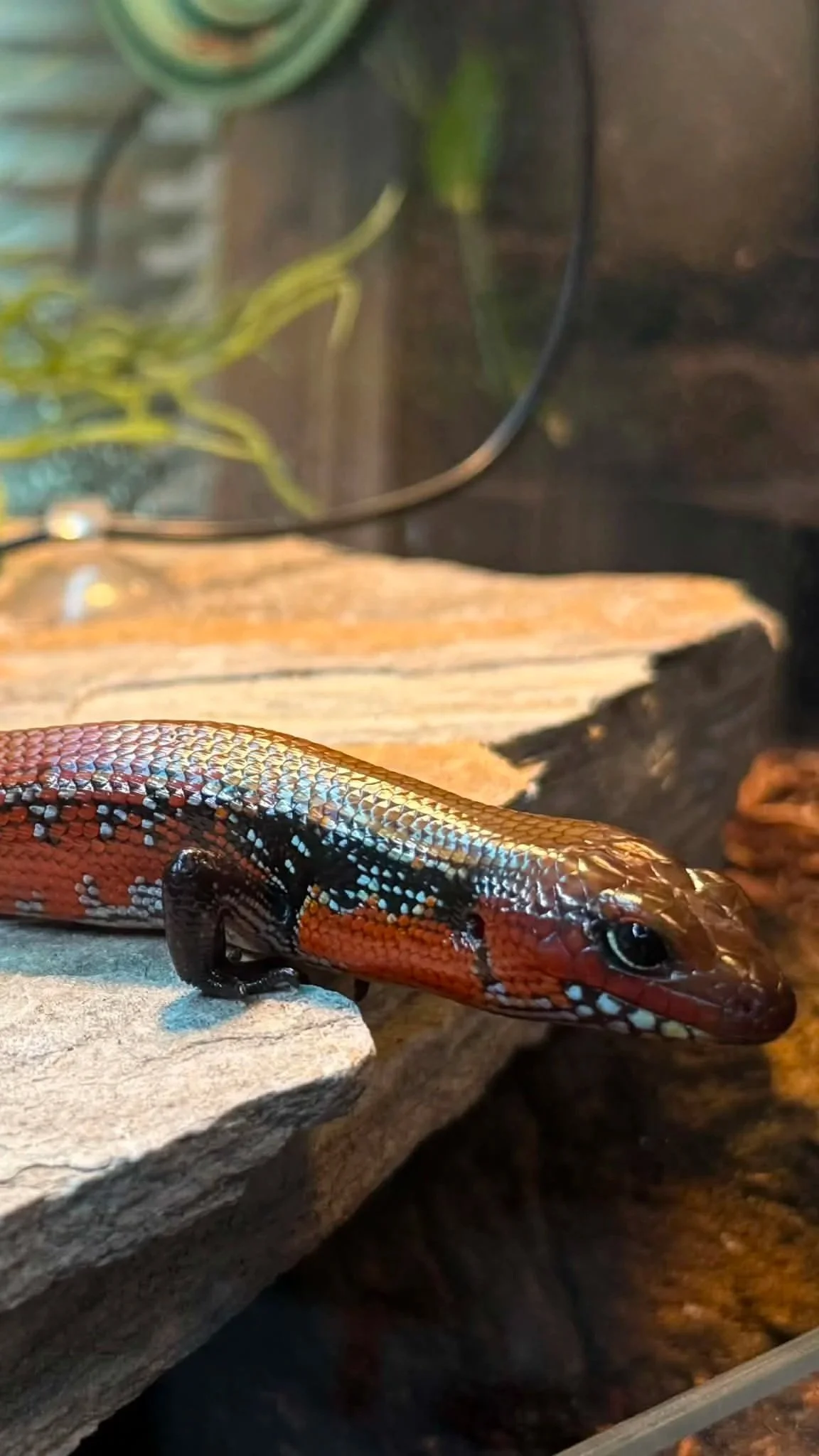
Fire skinks - the beautiful, elusive skink of the forest. Their secretive nature is one of the main reasons I believe this skink isn’t more popular. Captive bred specimens are getting easier to find, and I’m eager to see if they’re just as reclusive when they’ve been around people their whole lives.
My pair, Zuko and Mai, are still settling in for this year and probably will be looking at some 2027 babies from them as well. They eat well, and do seem curious and to enjoy watching -me- as long as I’m not also watching them. I do plan on putting a camera on these guys so I can see how active they are when no one’s around to rain on their parade. They are super fun as a fossorial, tropical skink species, which is not the norm for most skinks. They’re from the tropical forests of Western and Central Africa.
TheBioDude care sheet: here
Sandfish Skinks
Scincus scincus - least concern
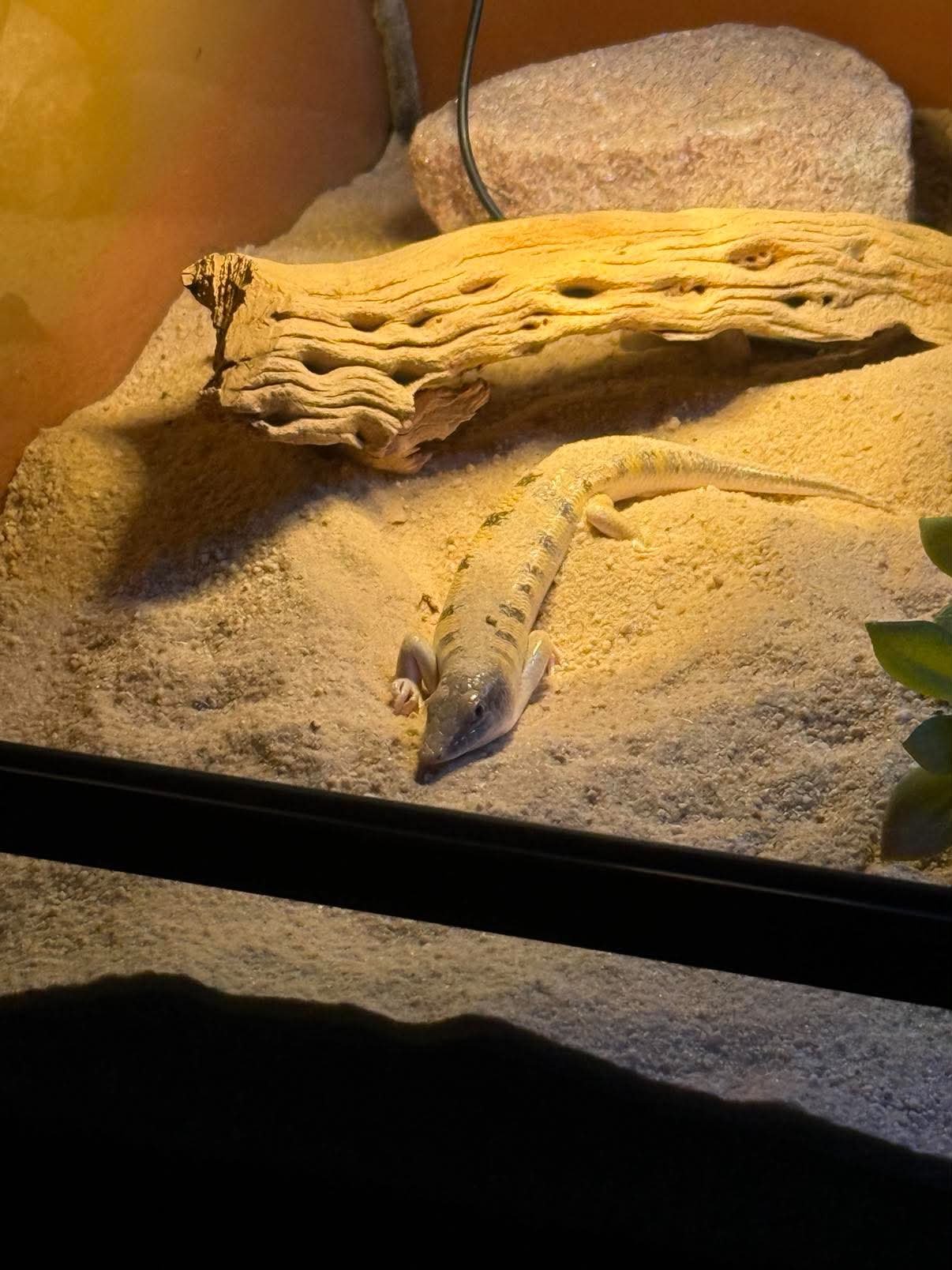
To my knowledge, not a lot of people are working on trying to produce sandfish skinks in captivity. They have been successfully reproduced before in at least 1997, and the research paper is available for free online here, so I doubt the issue is a lack of knowledge. Perhaps that they are so readily available as wild caught imports for relatively low prices is the cause. Still, I always prefer to be able to offer CB animals.
My sandfish are wonderful little creatures. From their serrated toes to swimming like fish through sand, they’re a joy to watch and I can usually catch them out basking first thing in the morning as long as I’m still and quiet. As we get more comfortable with each other, I’m able to observe some hunting behaviors as well.
I have two more sandfish in quarantine, and one individual appears to possibly be hypo. We shall see if we can determine genders and possibly get a pair or trio together and over-winter them to encourage breeding in the spring of 2027.
Reptifiles Care Sheet: here