
Skink Diets and How to Make Your Own
When I brought my first pink tongued skink home, I’d done all the research. Snails and slugs. Yummy. With just the one, I wasn’t sure about following the current advice of the day, which was to head to the Asian grocery stores and buy frozen apple snail meat to defrost in chunks and feed as needed. My first pink tongue would happily take the Can ‘O Snails offerings, so I was content.
But for every other herp on the planet, keeping a varied diet is super important, and these snail options all came without shells, thus lacking calcium and other important minerals. So what else to feed them?
The internet says turkey-based cat food, perhaps some bluey buffet, and other such options, none of which were received with any particular gusto. Then I got my second pink tongued skink and she… refused to eat snails at all. The only thing I could get her to eat was turkey cat food. Which is made, you know, for cats. And I really dislike having any animal on only a single food source for the duration of their lives, no matter how well I’m supplementing with vitamins and probiotics.
I started poking around online—several people made their own diets for their blue tongued skinks, but I finally found a small tribe that made their own food for their skinks. Going off of tons of different recipes, I formulated a list. I want to share some of my ingredients and process with you all, but as always, ensure you are doing your own research for the health of your animals. I haven’t had these foods tested for nutritional value, just common sense, and all of your skinks should still be offered their natural prey items, whether that’s live insects, snails, or whatever fits your species. I use my skink diet as a once-a-week ‘nutrient boost,’ not a staple diet. Also handy if weather delays feeder shipments for any reason.
Disclaimer aside, let’s dig in!
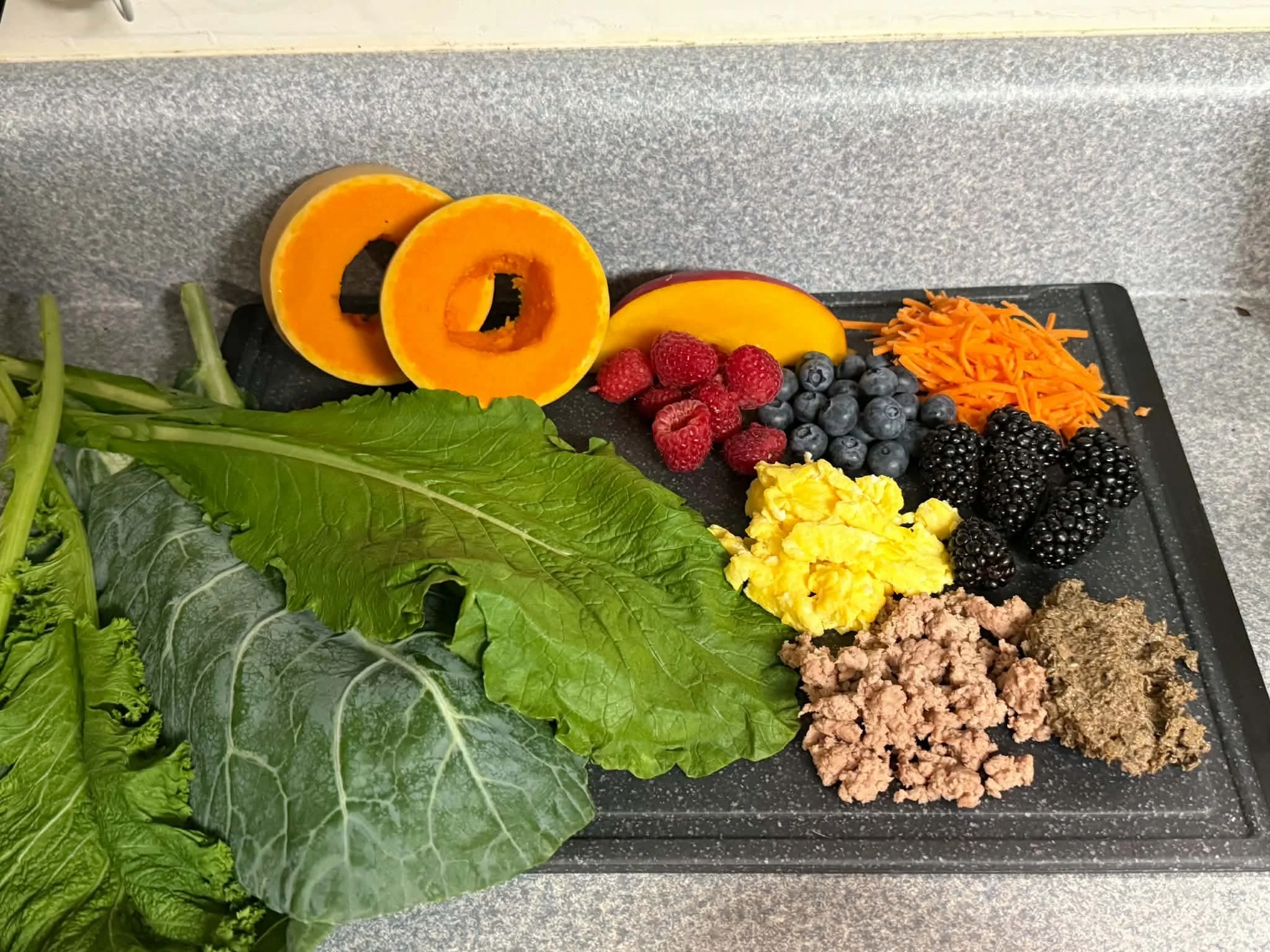
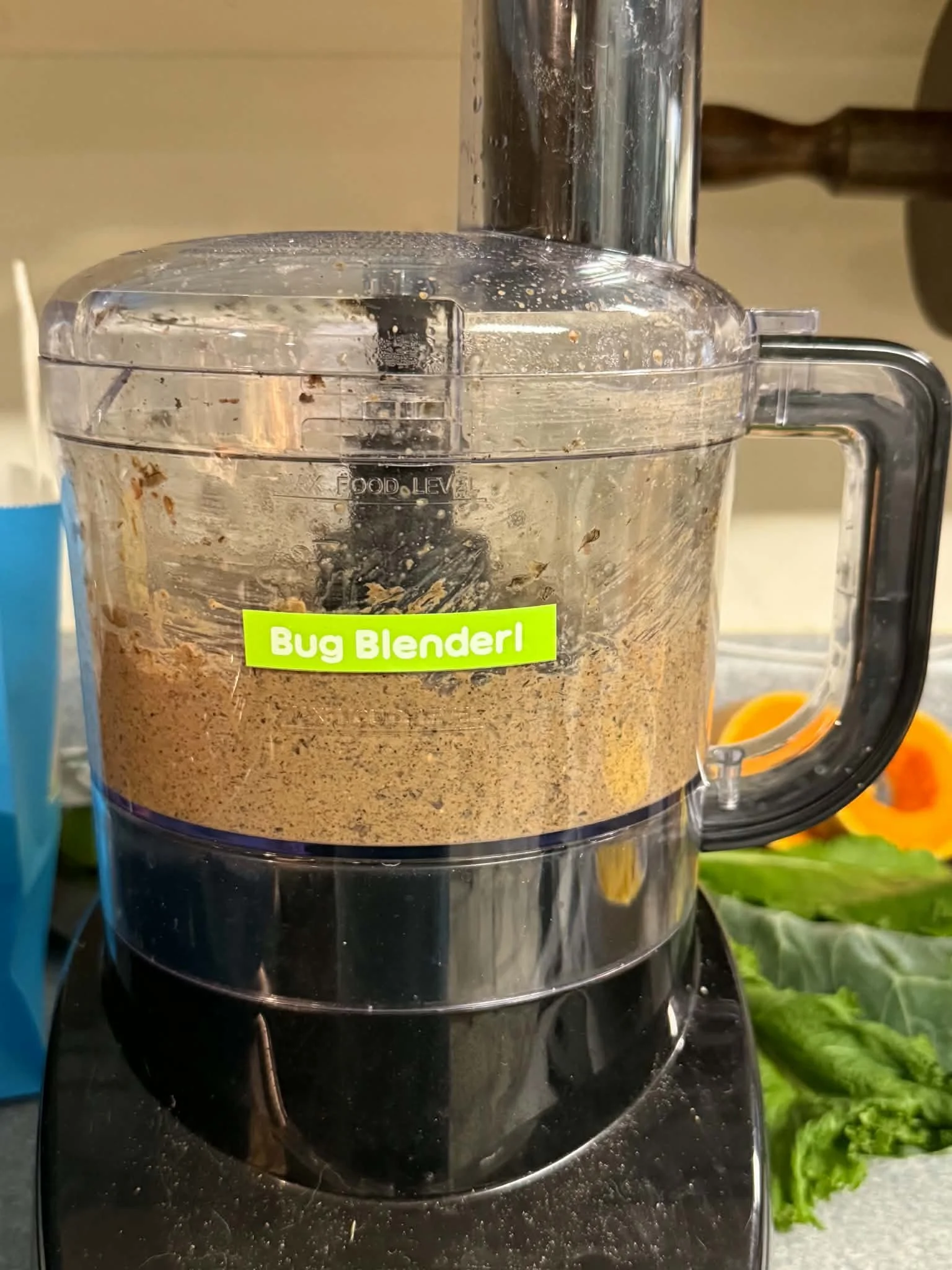
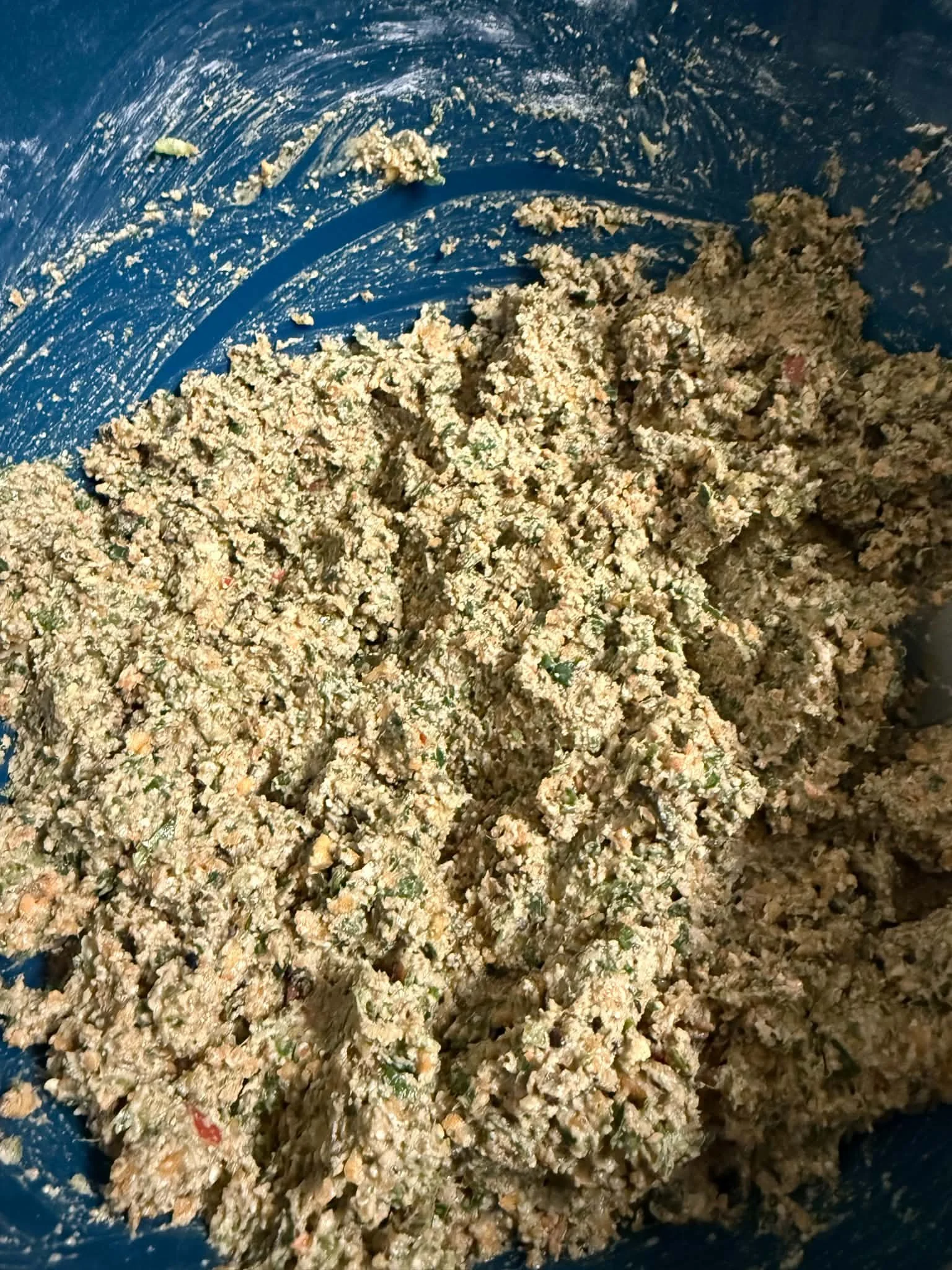
Ingredients for an insectivore formula include: mustard greens, collard greens, turnip greens, butternut squash, mango, raspberries, blueberries, blackberries, carrots, scrambled egg (no oil/nonstick spray), lean ground turkey, and bug mash. I don’t particularly measure everything out, I just sort of put a bit of everything in. Juicier things like the berries are usually in smaller quantities as we want the consistency to match the pate of a cat food, more or less. This also helps animals that were exclusively fed cat food transition to a healthier diet a lot easier.
Before anyone comes in with the ‘this is why you can’t eat at just anyone’s house,’ comments, my bug blender is very clearly labeled. If anyone visiting thinks that’s a joke and they should use this blender for anything for human consumption, after walking past tanks of crickets to get to my kitchen… I don’t know what to tell them. I tried!
For my bug mash, I use whatever bugs I can find locally at the time. Usually that means I have dubia roaches, crickets, super worms, nightcrawlers, BSFL, silkworms, and possibly a few wax worms. I do try and keep the bug and turkey portions at the very least equal, if not heavier on the bugs. This is my insectivore diet, of course. For the pink tongue diet, I just use snails instead of the bug portion, and far less fruits as they’re not quite as omnivorous. I do add green beans to theirs as well. In addition to making sure all feeders were gut loaded, I also add a calcium -without- D3 (all my skinks have UVB checked monthly with a Solarmeter 6.5r) and a reptile multivitamin such as Arcadia EarthProA or Herptivite. I may also add a reptile probiotic, though I’m not sure of the stability of that once frozen, so I mostly dust that on fresh feeders about twice a month.
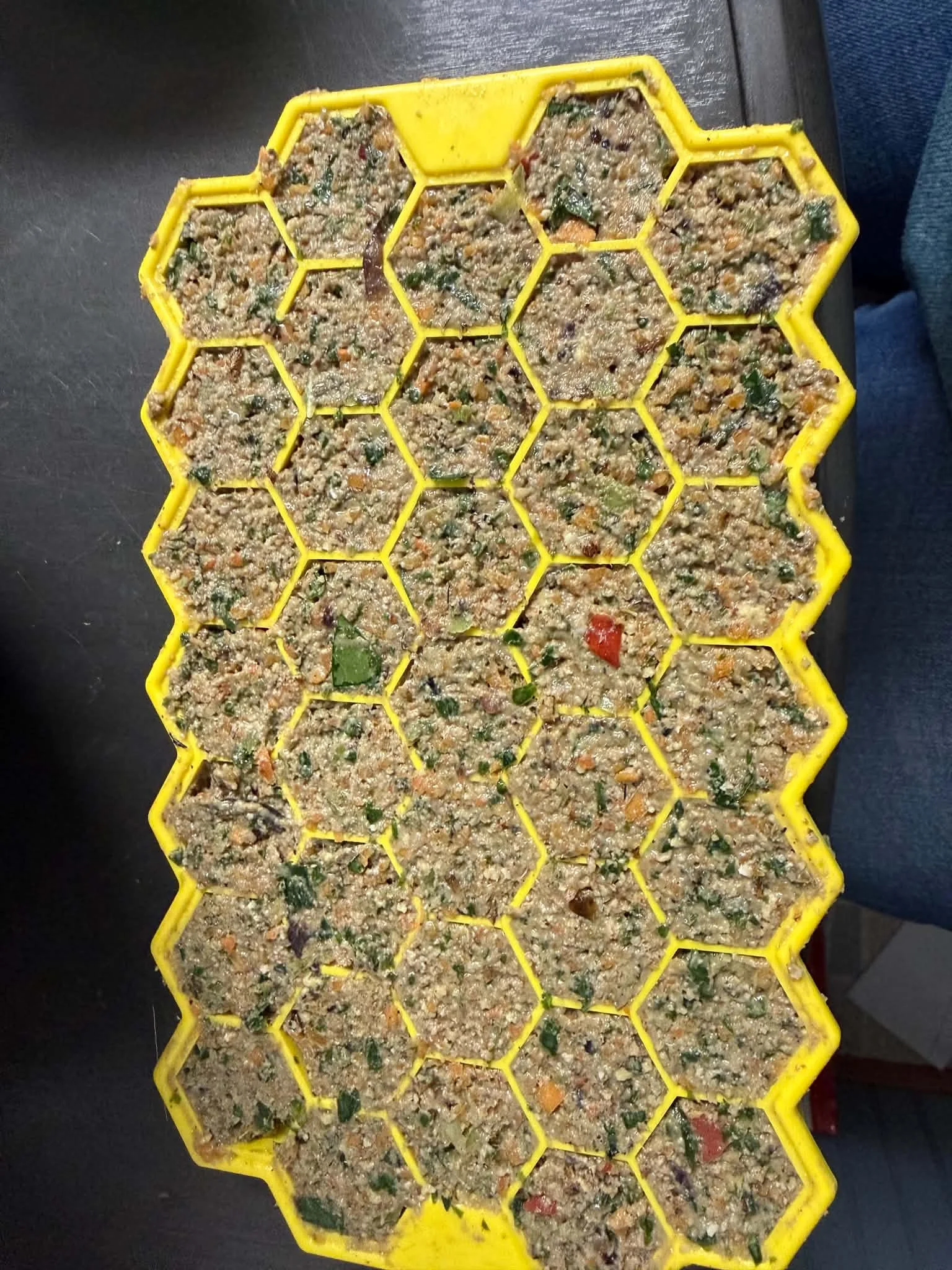
Then it’s a simple matter of grinding everything up, mixing it up, and putting it into cute little silicone trays to freeze it. They take about 30-45 seconds in the microwave to warm up when needed, and I usually leave them out for 10-15 minutes before feeding just to ensure no hidden hot spots are in the food.
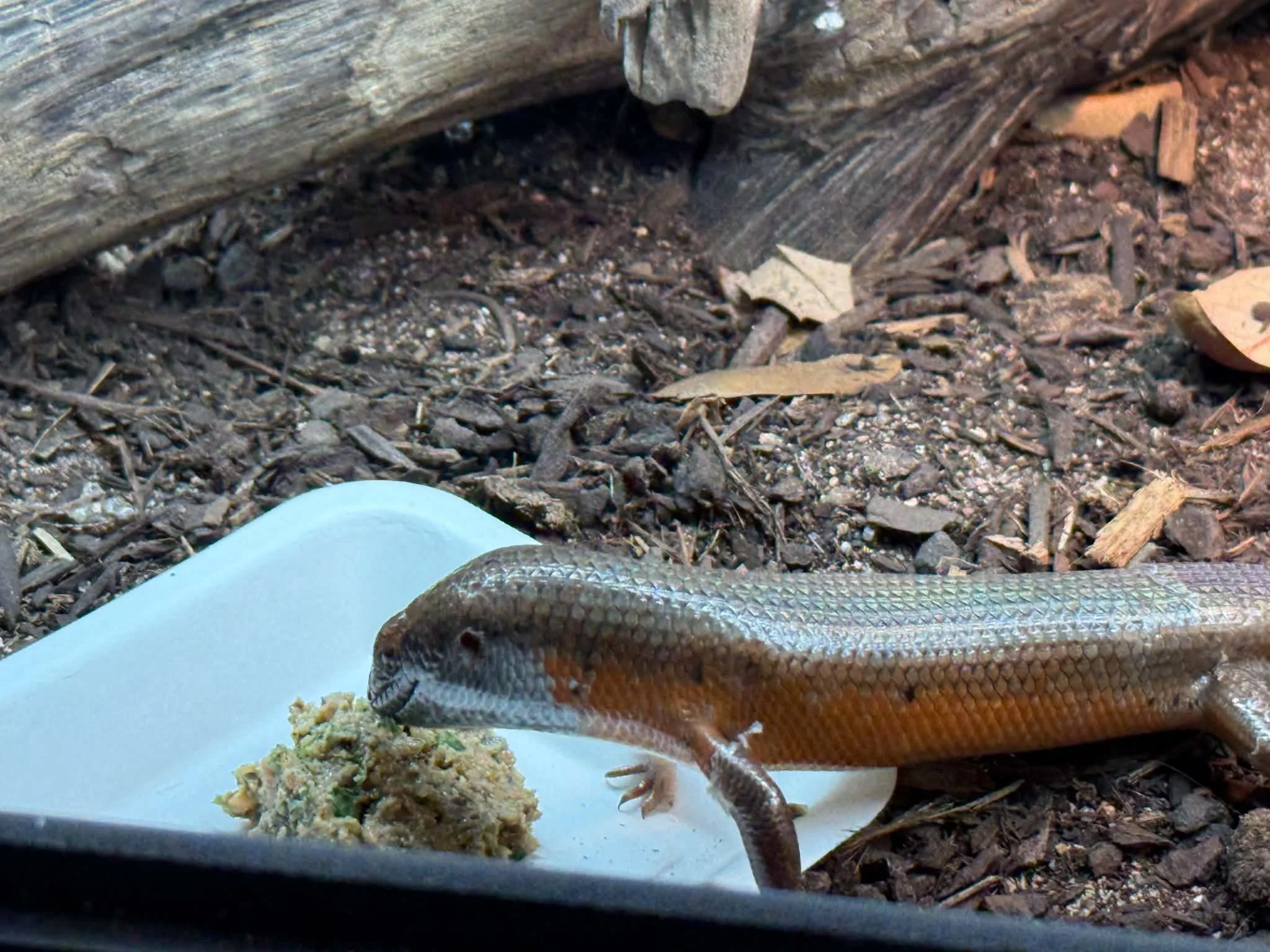
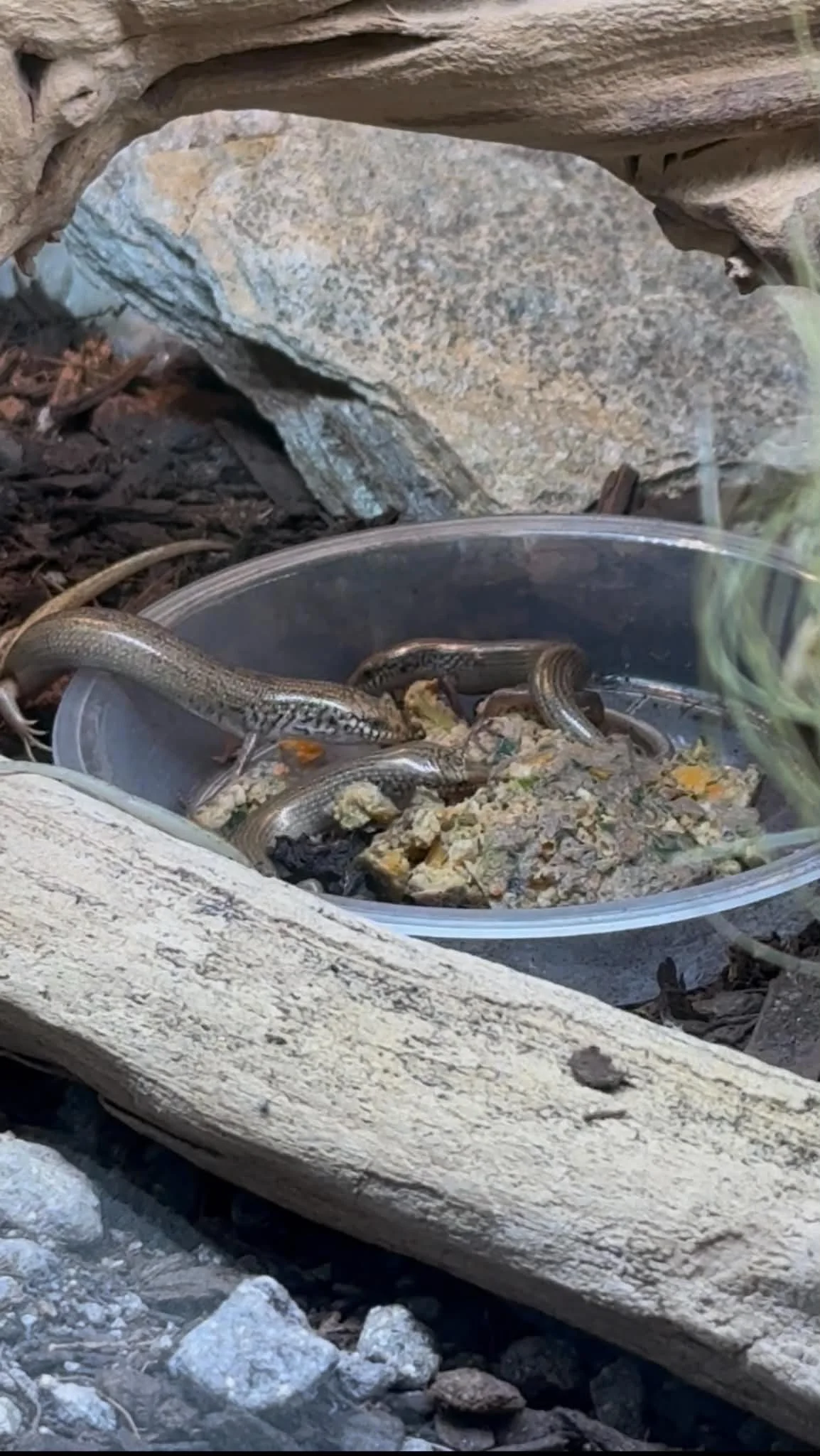
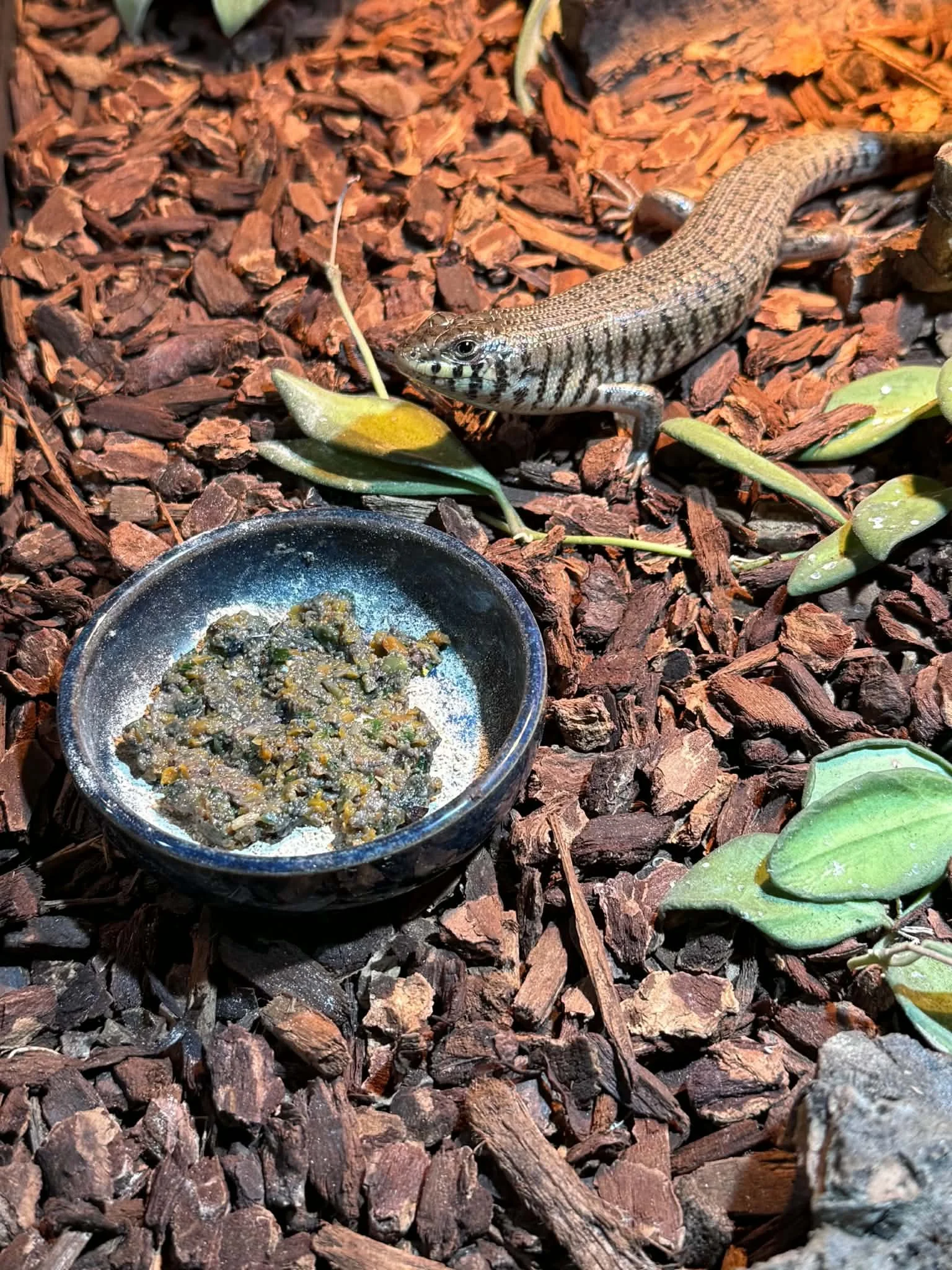
All in all, I think the skinks speak for themselves when it comes to suitability. They love it enough that even if I’m heating up a batch for the baby ocellated skinks, my zebras will all run to the front of their enclosures wanting to know where their helping is, too! It’s a great thing to have in the freezer in case of food disruption as well—hot or cold weather impacting cricket or roach shipments, or just bad batches coming into pet stores and the stores being out. It’s still far more balanced than having to suddenly rely on just mealworms or nightcrawlers in a pinch.
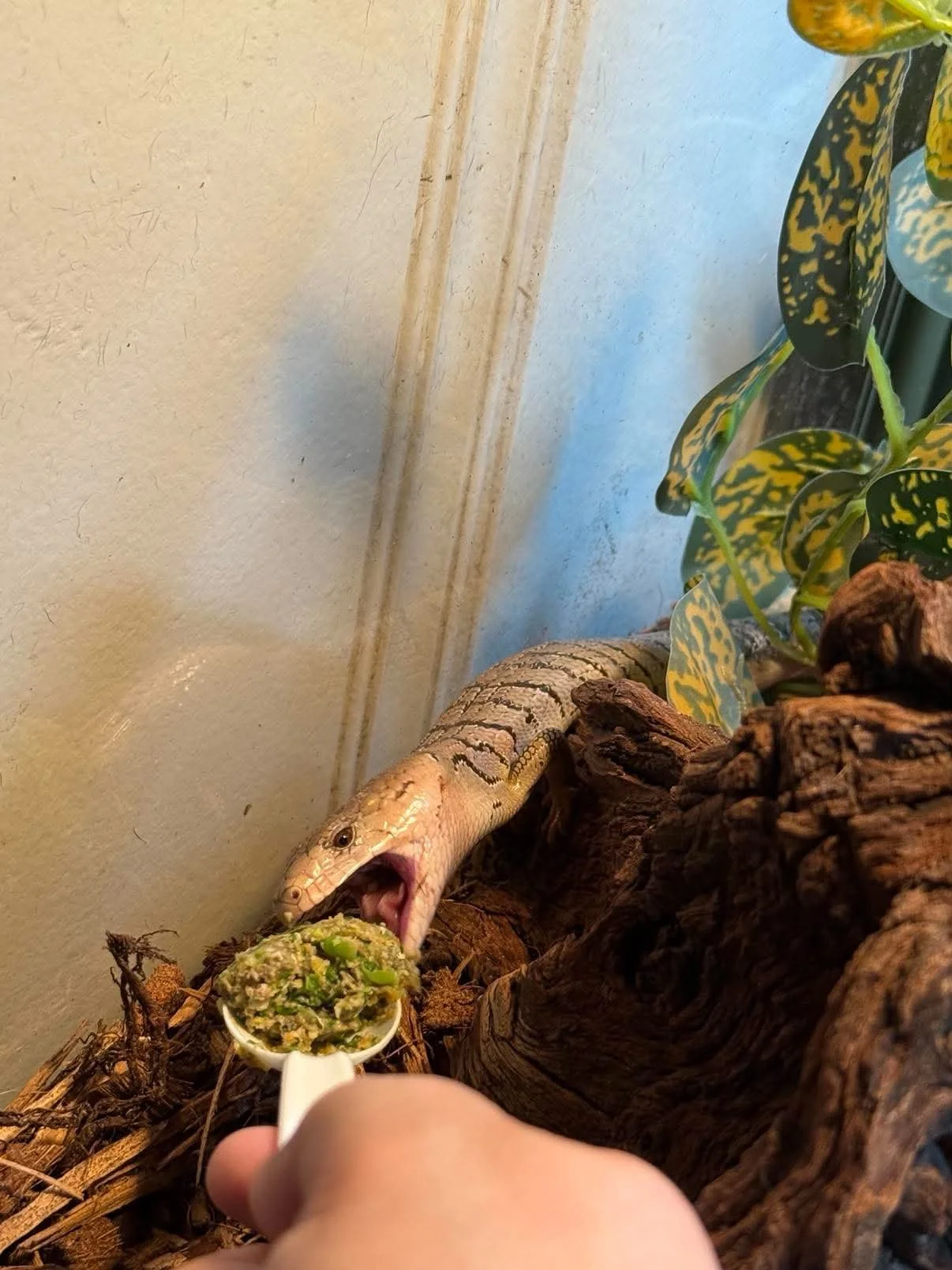
Anyway, I hope this has been informative for you all, and that you now feel empowered and encouraged to make some skink diet of your own! If you do, share pictures and videos of your babies eating it! As the picture with Selphie the pink tongue up there shows, sometimes feeding off of a spoon the first time or two can be super helpful until they recognize it as a food source. Once they do? You’ll have trouble keeping them out of it.